








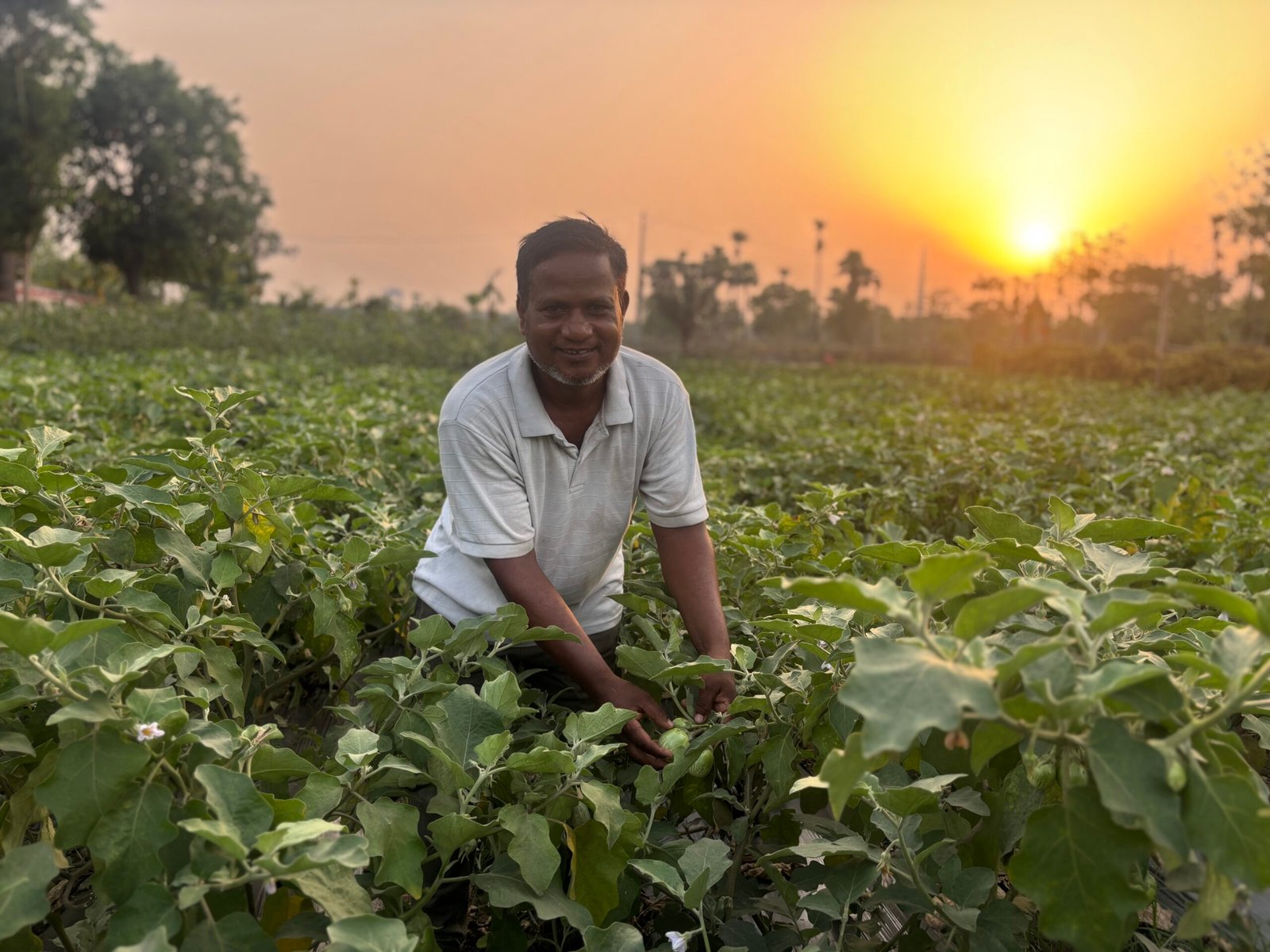
Khirod Chandra Behera, a farmer from Kochilamada village under Sibapur Gram Panchayat in Odapada Block of Dhenkanal district, has been adopting sustainable horticulture and improved farming practices. Over the past four years, with the guidance and support of Tata Steel Foundation, he has gradually strengthened his knowledge and skills in agriculture. Through these learnings, he is making steady progress in his farming journey and encouraging fellow farmers in his community to explore more sustainable and modern approaches.
Coming from a family that traditionally practiced agriculture, Khirod initially relied on subsistence farming methods. However, modest returns prompted him to explore new techniques that could improve productivity and profitability. Through Tata Steel Foundation’s interventions, he received quality seeds, mulching sheets, and extensive training on advanced agricultural practices such as solar pumps, drip irrigation, trellis netting, and organic farming methods.
A significant milestone in his learning journey was a training exposure visit to Gopalpur, where he gained practical insights into scientific horticulture. Equipped with this knowledge, Khirod diversified his cultivation and now successfully grows horticultural crops during both Kharif and Rabi seasons. His crop portfolio includes ladyfinger (okra), bitter gourd, cucumber, ridge gourd, and brinjal.
Among these, Brinjal has emerged as his most profitable crop, generating an average monthly income of nearly ₹60,000 and seasonal earnings reaching up to ₹1.5 lakh. Committed to sustainable agriculture, Khirod has completely adopted organic farming practices and avoids the use of chemical fertilizers such as urea and DAP. Instead, he uses locally available resources to prepare and apply formulations such as Jeevamrutha, Beejamrutha, and Handikhata, which help improve soil health and support better crop growth in a natural way.
He markets his produce through the weekly Thursday and Sunday haat, ensuring direct access to consumers and better returns. Today, his success has inspired many farmers in and around the region, who regularly approach him to learn innovative and sustainable farming techniques. Khirod’s journey reflects how knowledge, technology, and institutional support can empower rural youth and strengthen agricultural livelihoods.